
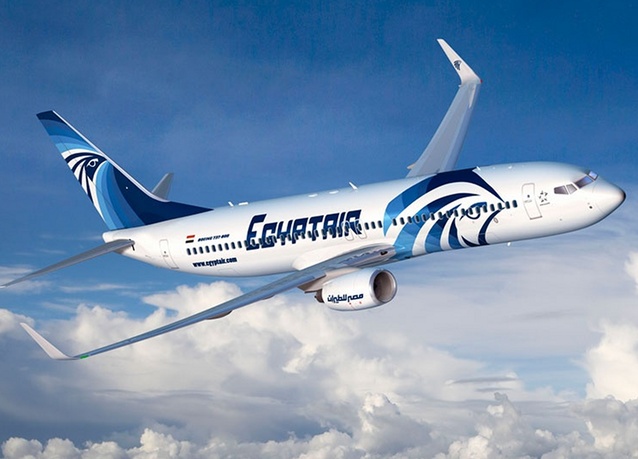
In a quiet hangar in Blytheville, Arkansas, the front section of an Airbus A220-300 rests on a dismantling line. Just three years ago, this same aircraft, SU-GFA, EgyptAir’s first A220 represented the future: a sleek, fuel-efficient jet meant to modernize the airline’s narrowbody operations and signal its ambitions on regional routes.
Today, it’s scrap.
Last year , EgyptAir sold its entire fleet of twelve A220s. Six of these aircraft landed with U.S.-based lessor Azorra; five are being parted out for spares, and only one is still flying. The dismantling of SU-GFA marks the first known part-out of an A220 in commercial service less than three years after it rolled off the assembly line.
This is the story of how a national airline, a troubled engine, and a fragile global supply chain combined to turn a once-celebrated fleet into a cautionary tale of aviation risk.
The Promise: A Next-Generation Jet

Launched by Bombardier as the CSeries and later adopted by Airbus, the A220 was widely seen as a game-changer: lighter than the A320neo, more spacious than the Embraer E-Jet, with new-generation Pratt & Whitney PW1500G geared turbofan engines promising fuel savings of up to 20%.
For EgyptAir, these aircraft were meant to support a broader modernization push. The airline took delivery of its twelve A220-300s between 2019 and 2020, aiming to deploy them on domestic and medium-haul routes across North Africa and the Middle East.
At the time, the numbers made sense: a modern cabin, lower fuel burn, and an aircraft small enough to open thinner routes profitably. But the calculations didn’t account for what would come next.
The Problem: PW1500G Engine Troubles
Almost from the moment these jets entered service, they suffered reliability issues tied to their PW1500G engines.
Operators worldwide including Swiss, airBaltic, Iraqi Airways, and Air Tanzania reported premature combustor wear, inflight engine shutdowns, and unscheduled removals. The most damaging factor was the time these engines had to spend in overhaul shops. Instead of the expected 5,000 cycles before major service, many engines needed attention after barely 1,000 cycles.
Pratt & Whitney, under pressure to retrofit combustor liners and redesign components, struggled to keep pace with the demand for spare engines and parts. As a result, dozens of A220s across the globe were grounded for weeks or even months.
For EgyptAir, this meant a large share of its new fleet sat idle on the tarmac, undermining route planning and leading to lost revenue.

The Fallout: Grounded Aircraft, Broken Economics
With aircraft unavailable, EgyptAir was forced to reassign older jets to routes meant for the A220s, eroding the operational cost advantage the type promised. The airline’s reputation suffered too. Travelers faced delays and cancellations, while the maintenance burden soared.
All this occurred as the COVID-19 pandemic cratered global demand. The combination proved devastating: new planes that couldn’t fly and a market that didn’t need them.
By late 2023, the fleet had become a liability. In early 2024, EgyptAir struck a deal to sell the twelve A220s for roughly $300 million about a quarter of the original investment. Azorra, the buyer, quickly saw the aircraft not as planes to lease, but as valuable sources of engines and parts.
The Afterlife: From Flagship to Parts Shelf
In April 2025, Azorra began dismantling SU-GFA. Five of the six EgyptAir A220s it acquired will never fly again; instead, they’ll feed the parts pipeline to keep other operators in the air. The engines and components are headed primarily to Delta Air Lines, which faces its own pressure to keep its large A220 fleet flying.
Mike McBride, Vice President at Delta Material Services, called the move “an innovative approach to minimize disruption” a frank acknowledgment of how desperate the industry has become to source reliable spares.
In essence, Azorra’s purchase became less about operating aircraft and more about salvaging whatever value could be found in a troubled asset class.

The Broader Picture: Supply Chain and Strategic Lessons
What happened at EgyptAir reflects a wider reality: even cutting-edge jets are only as reliable as the global networks that support them.
The A220 remains a fundamentally sound aircraft: efficient, quiet, and popular with passengers. But the PW1500G engine’s reliability issues, combined with supply chain bottlenecks, exposed vulnerabilities that EgyptAir hadn’t fully anticipated.
The airline’s strategy to add a new fleet type without robust in-region maintenance capacity made the situation worse. EgyptAir became dependent on long repair lead times and struggled to get replacement engines quickly. The result: grounded planes and bleeding cash.
The decision to sell at a huge loss was, in some sense, the only viable option left.



Comments are closed.